
I’ve always been inspired by restaurants around the world that have a true farm-to-fork approach. Places raising their own livestock, growing vegetables across acres of land and picking fruit from their own orchards.For a long time, though, I couldn’t quite get my head around how that could translate to a small, family-run restaurant in the heart of Pooley Bridge. We don’t have acres of farmland behind the restaurant or our own kitchen garden supplying everything we need. What we do have is an incredible network of growers, farmers, producers and suppliers right here on our doorstep. Over time, I’ve realised that our version of farm-to-fork is about building those relationships. It’s about knowing the people growing our vegetables, producing our dairy, raising our livestock and making the ingredients we cook with. It means conversations, collections, late night messages about what’s coming into season and sometimes shaping a dish around what a producer has available rather than simply ordering what we want from an online catalogue.
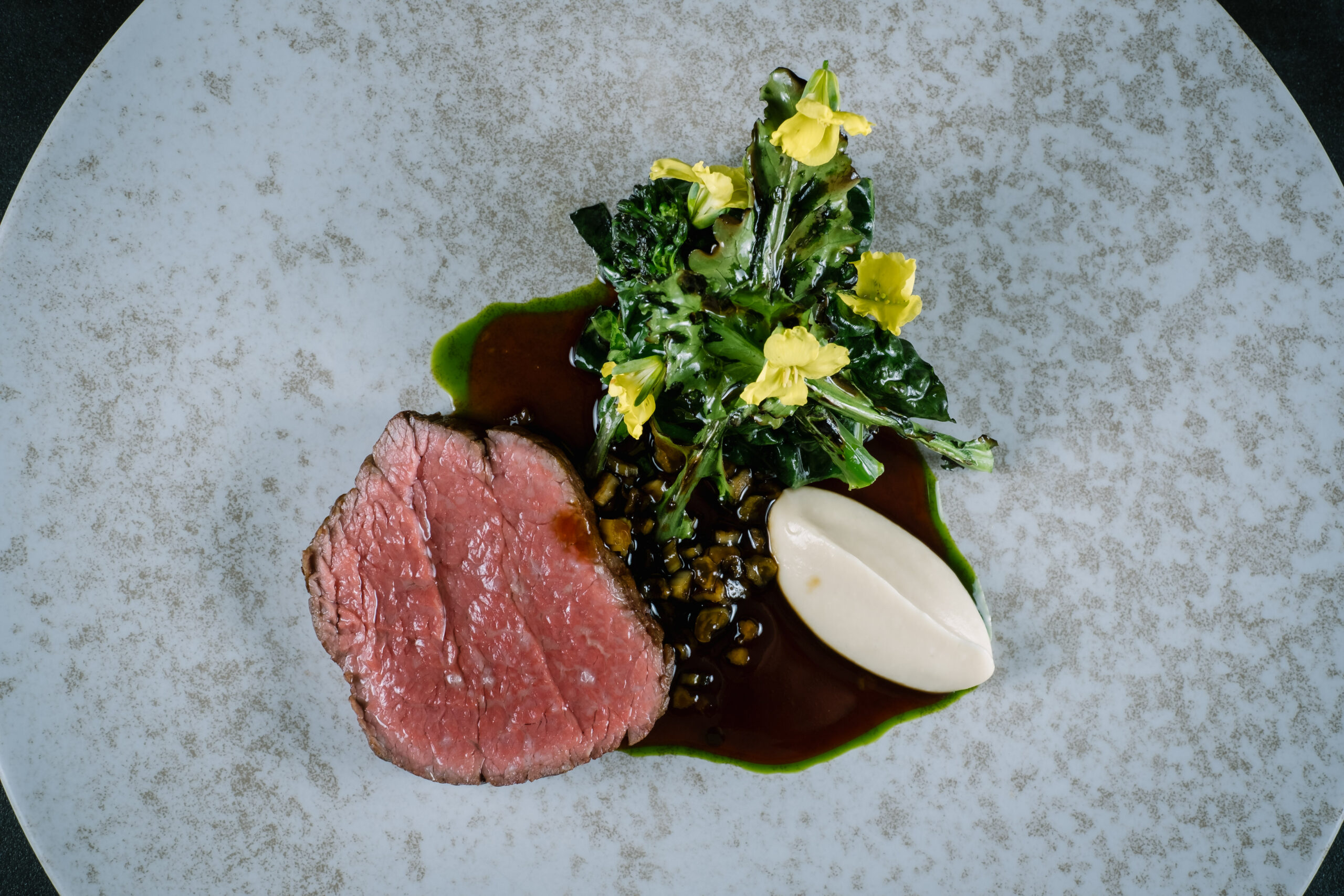
Cumbrian Beef Fillet, Veg Patch Brassicas, Kohlrabi, Beef Sauce & Chive
I was really excited when I saw that Jannike and Ben Taylor had started producing their own flour, made using heritage grains grown on their farm. I’d already been cooking with their award-winning rapeseed oil for years, so I got in touch with Jannike to find out more about the flour and talk about how we could start using it at 1863. During that conversation, we got onto the subject of their new farm shop, which was just about to open. Jannike mentioned that a couple called Nick and Nic would be supplying them with vegetables grown on their farm and suggested there might be an opportunity for us to use some of their produce at the restaurant too. The rest was history.
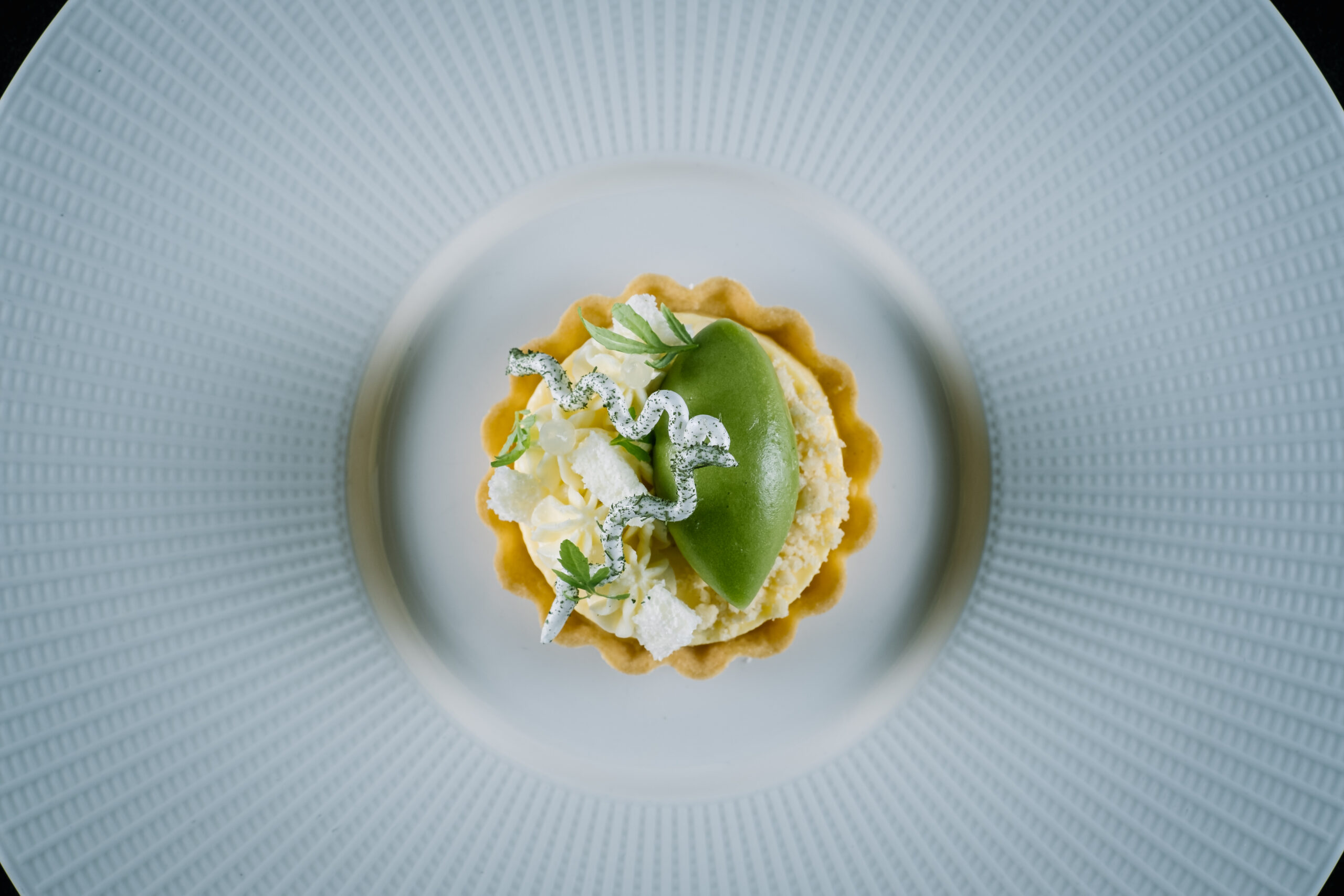
Lemon Parfait, Veg Patch Basil Sorbet

Chalk Stream Trout, Veg Patch Courgette Salad, Buttermilk Sauce & Dill
It probably isn’t the most conventional or easiest way to operate a restaurant, particularly in the current economic climate. But it feels like the right way for me. It keeps more of what we spend within our local community, supports local people, reduces the distance between the people growing the food and the people eating it, and ultimately gives us better ingredients to cook with an in tern a better story to tell.
For me, that is what local sourcing at 1863 has become: building a network of people and relationships around the restaurant. A community that, in its own way, has become our farm.
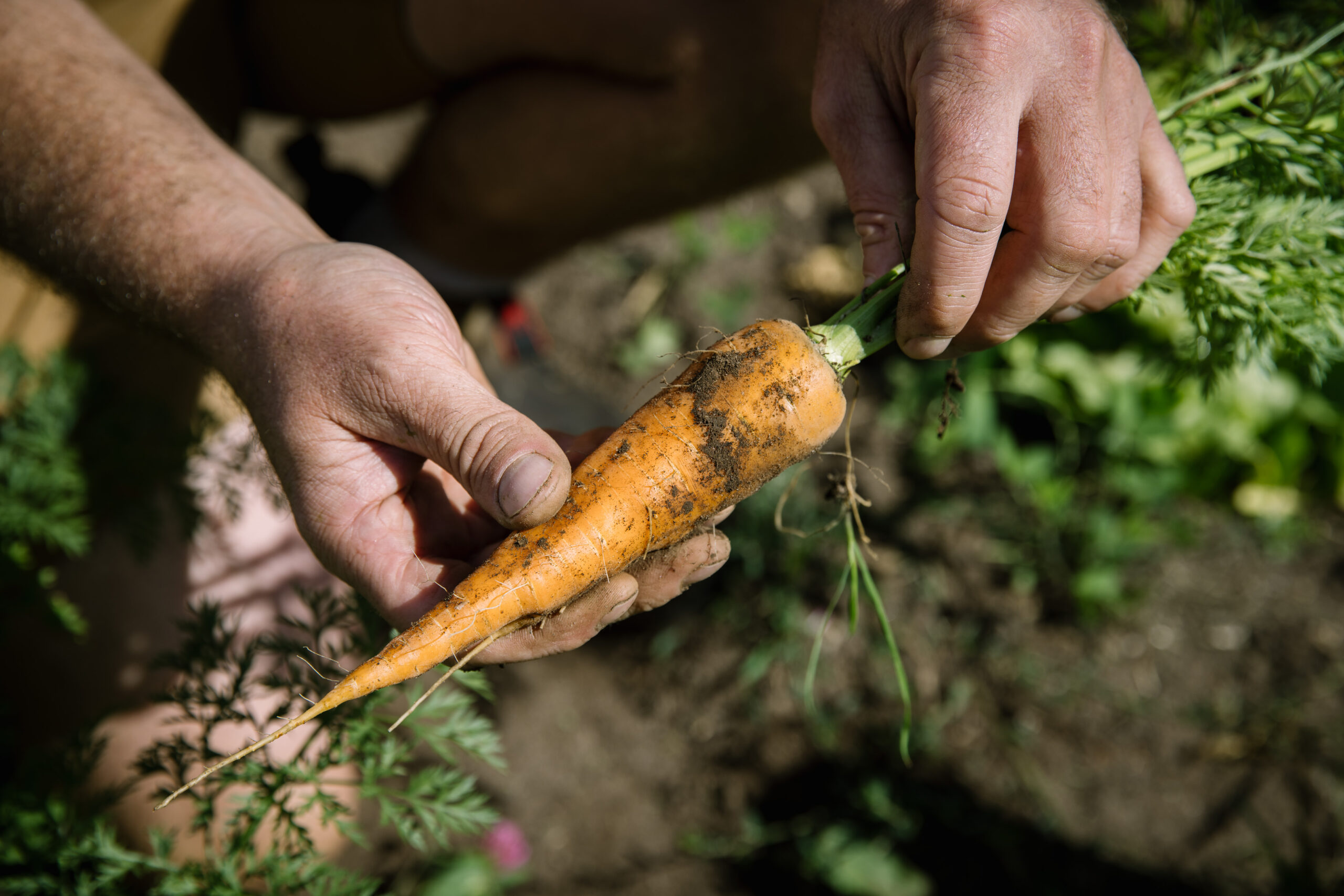
The perfect carrot?
I arranged to meet Nick and Nic at The Veg Patch in Plumpton and came away completely inspired. Their passion for what they grow was infectious, but more importantly the quality of the produce was exceptional. Walking around the patch, seeing what was growing and talking about what would be coming through over the following weeks and months immediately made me rethink menus. Kohlrabi, broad beans, courgettes, cavolo nero, Red Russian kale, borage flowers, tomatoes, carrots, radishes, rainbow chard, beetroot — the list goes on. I began looking at what Nick and Nic were growing and asking myself what we could create around it. That shift has been really exciting for the whole kitchen team. It has had an impact beyond the kitchen too. When the team can tell guests where something has been grown, who grew it creates a genuine conversation in the restaurant.
The Veg Patch joins an ever-expanding network of like-minded Cumbrians who now supply 1863. The Taylors (Eden Yard), The Errington Family (Low Moor Farm), Claire & Stephen Bland (Abbot Lodge), Henry & Anna Howard (Johnby Hall), Jean Farkin (Soft Fruits), Jordan Mckeating (Fells & Fungi), Aiden Monks (Lovingly Artisan), Kate Weightan (Ullswater Honey), Lyn Mallinson (Quince), The Scott Family (Cartmel Valley Game), The Robinsons (Martindale Muscovies), The Renisons (Free Range Eggs), The Jacksons (Winter Tarn Dairy), Neil Scott (The Fish Cellar) to name a few.